

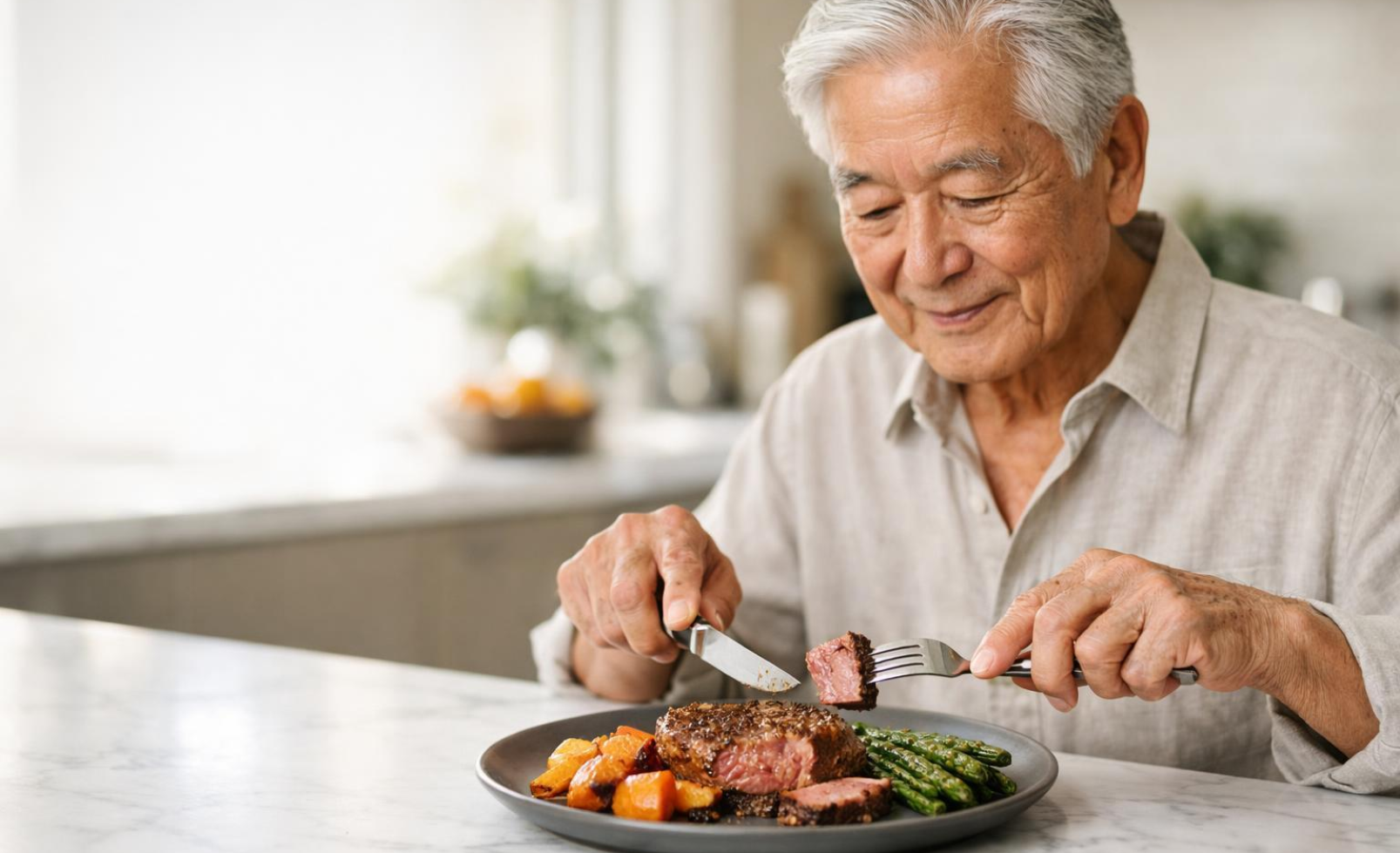
Nutrition advice is where health span guidance goes to die. Every year brings a new diet, a new villain food, a new miracle ingredient. Most of it is noise. This post covers the small number of things with real evidence behind them, starting with the one most elder individual’s get wrong.
Protein is the headline:
After about age 60, the body becomes less efficient at turning dietary protein into muscle, a phenomenon called anabolic resistance. At the same time, most older adults eat less protein, not more. The result is sarcopenia: the slow loss of muscle that turns into weakness, falls, fractures, and lost independence. Muscle is the organ of health span, and protein is its raw material.
Practical targets:
Aim for roughly 1 to 1.2 grams of protein per kilogram of body weight per day. For a 180-pound person, that is about 80 to 100 grams. Many older adults barely reach half that. If you have kidney disease, confirm your target with your doctor first.
Spread it across the day. The body builds muscle meal by meal. Thirty grams at breakfast, lunch, and dinner beats a token breakfast and a protein-heavy dinner. Breakfast is where most people fall short: eggs, Greek yogurt, cottage cheese, or a protein shake fixes it.
Anchor every meal with a protein source. Fish, poultry, eggs, dairy, beans, lentils, tofu. Then fill in around it. This one habit reshapes a diet without counting anything.
If you are on a GLP-1 medication, protein moves from important to critical. Appetite drops, portions shrink, and muscle goes with the fat unless protein and strength work defend it. Eat the protein portion of your meal first, while appetite lasts.
The rest of the short list:
Fiber, mostly from plants. Vegetables, fruits, beans, and whole grains feed the gut, steady blood sugar, and lower cardiovascular risk. Half the plate is produce; that is the whole rule.
Sodium down, especially for blood pressure and heart failure. The saltshaker is a minor player. Processed foods, restaurant meals, canned soups, and deli meats carry most of the load. Reading labels on those four categories does more than any seasoning change.
For diabetes: sequence and pairing beat elimination. Protein and vegetables before starches flattens the glucose curve. Your CGM will show you this in real time. Few foods need to be banned; most need to be paired and portioned.
Hydration counts as nutrition. Thirst signaling weakens with age. Mild chronic dehydration shows up as fatigue, dizziness, and constipation, and it thickens secretions, a real problem for our COPD patients.
What to ignore?
Detoxes, cleanses, single-food miracle claims, and any plan you cannot imagine following in five years. The evidence consistently favors boring, repeatable patterns over dramatic ones. The Mediterranean pattern remains the best studied because people can live on it.
Nutrition is not a test you pass once. It is a default you set. Set protein first and most of the rest follows.